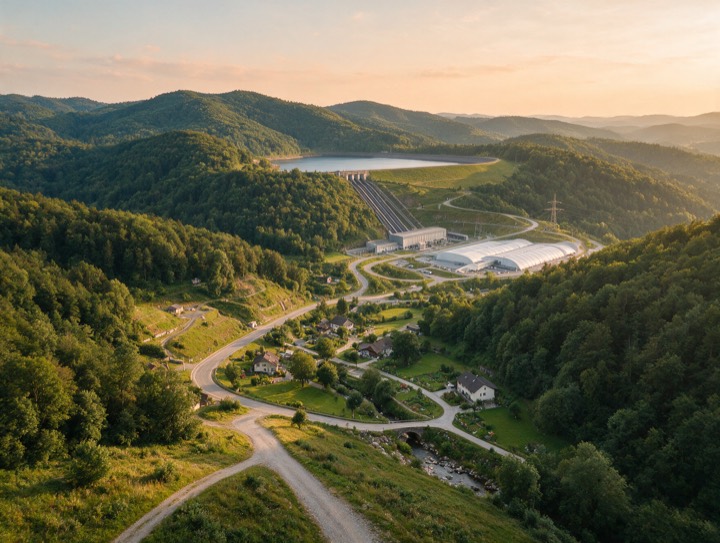
Environmental performance is a design constraint: the reservoir, the plant’s operations and the surrounding ecosystem are never compromised to add AIDC capacity.
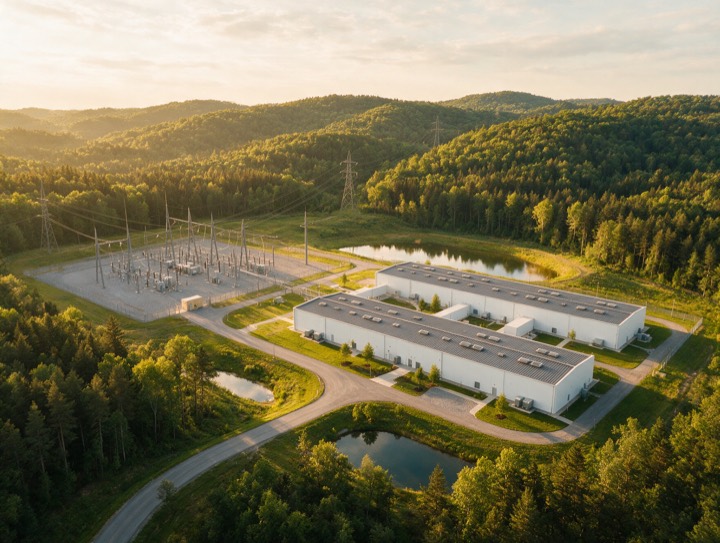
Artificial intelligence is driving one of the largest infrastructure build-outs since the advent of the internet, and a standalone data centre duplicates the transmission, backup generation, cooling and roads the energy sector already owns. Most data centre sustainability programmes work by mitigation: build the campus, then manage its draw on land, water, power and air. AI-Ready PSP™ works by avoidance: reuse the infrastructure already being developed for the energy system, so the heaviest impacts are designed not to arise in the first place.
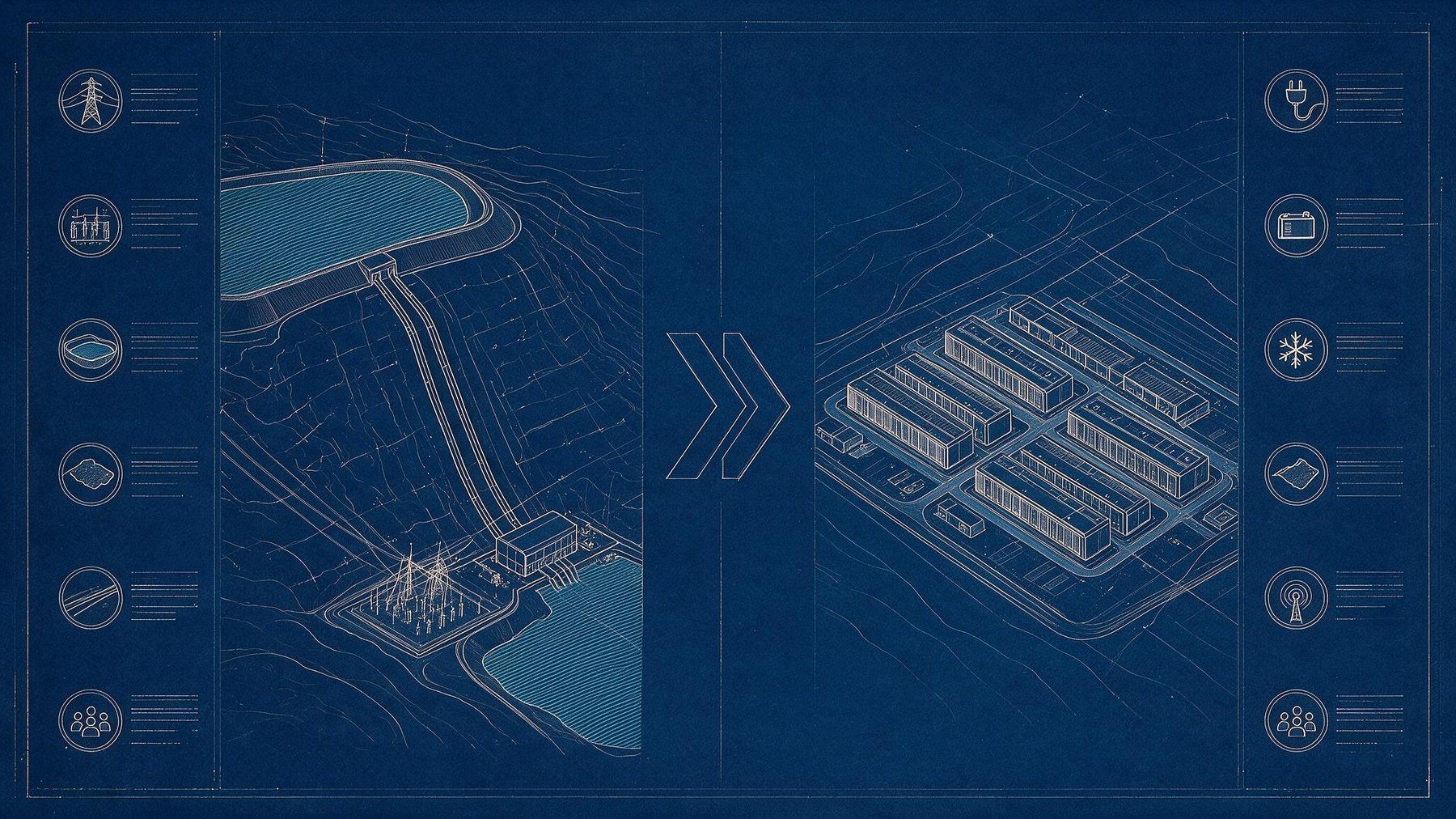
One side's shopping list is the other side's balance sheet: hyperscale AI data centres and pumped storage projects were developed for entirely different purposes, yet they require remarkably similar assets.
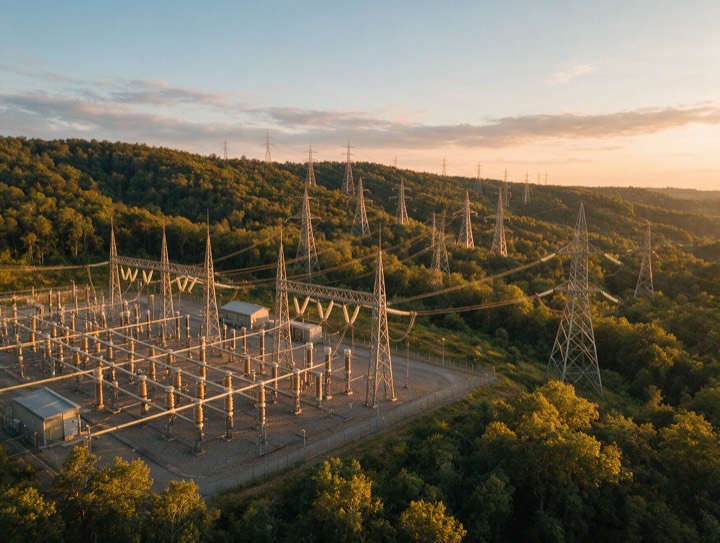
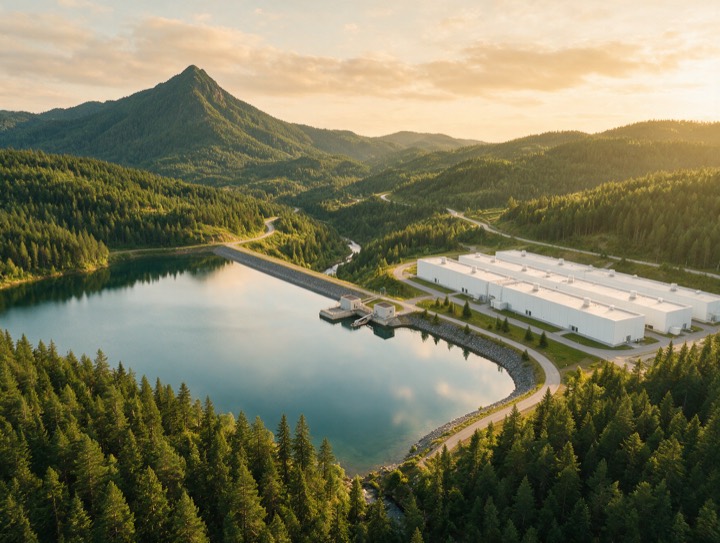
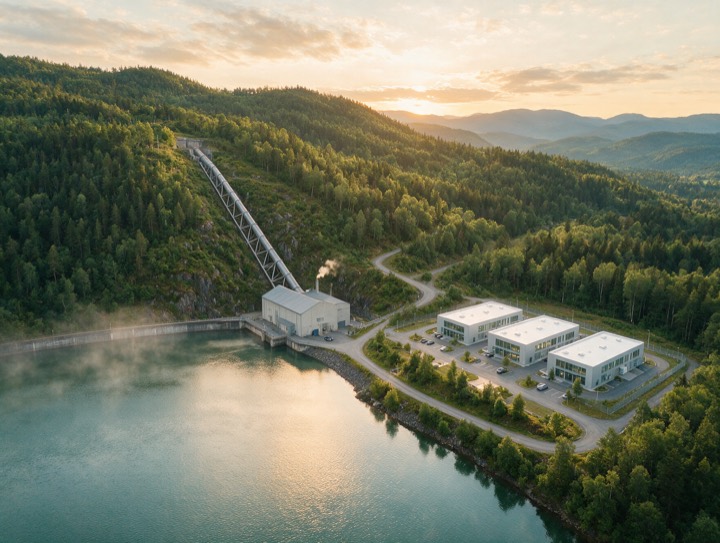
Fig. 01 · The same site, read twice: as a power asset, and as a data centre foundation.
The switchyard, transmission connection, roads, land and water infrastructure already exist. Reusing them avoids the concrete, steel and disturbed land of a duplicate build-out, and the embodied carbon that comes with it; the extent of reuse is established project by project.
The campus draws power at transmission voltage from the plant's own 400–765 kV switchyard. No new corridors are cut through farmland or forest, and no years are lost in interconnection queues.
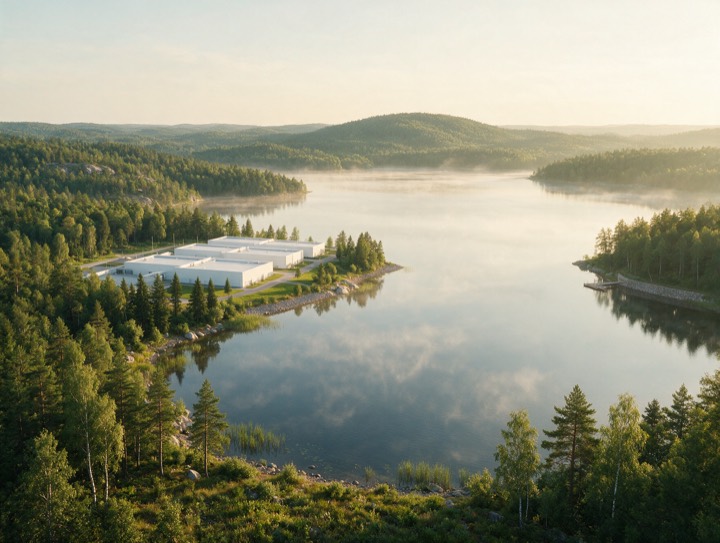
Cooling is once-through from the plant's lower reservoir, with raw reservoir water hydraulically isolated from the IT loops through heat exchangers and evaporation only a supplementary mechanism. There are no borewells and no municipal draw, and every site's water balance, including existing community and agricultural uses, is assessed before the design is fixed.
A conventional campus rejects its heat to the surrounding air, and a cluster of them warms a neighbourhood. Here the heat is rejected to reservoir water as a sensible heat sink and dissipated across a working power landscape, within thermal limits defined for the site.
Continuity comes from the pumped storage behind the fence, complemented by UPS and battery ride-through, so conventional diesel standby, with its fuel logistics, testing and emissions, can be materially reduced or eliminated in the final resilience architecture.
The campus arrives on land the project has already consented, beside infrastructure the region has already planned around. What it adds is long-term skilled employment and digital infrastructure in the place where the power is made. Co-location reduces the incremental burden; the campus still carries its own approvals and site-specific assessment.
And both sides plan in decades.
AI-Ready PSP™ treats sustainability as an engineering outcome of infrastructure reuse, efficient heat rejection and environmental integration, with deployment constrained by defined power, water, thermal, ecological and regulatory limits. The numbers behind these claims follow below, and the white paper carries the full engineering detail.
The architecture and the numbers have been validated by AFRY, one of the world's leading engineering and advisory companies in pumped storage and data centres.
The most sustainable infrastructure is often the infrastructure that already exists.
The proposed architecture has the potential to deliver
Every PSP is unique, and some are exceptionally well suited to hosting AI infrastructure. If your project is under development, under construction or already operational, a pre-feasibility assessment, undertaken jointly with AFRY, will tell you what becoming AI-Ready could be worth: a second revenue stream on assets you have already built.
Request a pre-feasibility assessmentA campus that inherits its grid connection, cooling source, land and civil works arrives years sooner, at lower capital cost, with a footprint your sustainability report will welcome. If you are siting AI capacity, the shortest route may run through a reservoir.
Get the AI-Ready PSP™ White Paper